
The Emotional Infrastructure
What are fintechs really buying at the stadium?


On the Piccadilly Line, heading toward north London, you can already feel the fervor. The carriage is packed. Red and white dominate the Tube—on jerseys, scarves, caps. It’s a sunny Saturday afternoon. You’re with family or friends. When you exit Holloway Road station, the Emirates Stadium reveals itself. You sense something special in the air. A dense crowd moves in the same direction. You pass two black cannons, symbols of the Arsenal club, or the statue of Thierry Henry, sliding on his knees. You feel the heritage of this club created at the end of the 19th century.
The atmosphere is electric at the stadium gates. People laugh, grow excited, have a drink. After security, you tap your phone to pass through the turnstiles, then climb the stairs to enter the stadium. A pulsing musical backdrop resonates louder and louder in your ears. Then a pitch 113 meters long by 76 wide, magnificently green and as smooth as a billiard table, opens before you. You sit down, a beer or soda in hand, perhaps a hot dog for the hungriest among you. Your leg trembles with anticipation when intense music rises through the stadium. The excitement reaches its peak. The players enter the pitch. Let the spectacle begin.
With each Gunners goal—the team’s nickname—the stadium erupts. People celebrate, hug, kiss. The emotions are raw, immediate. Joy, fear, surprise. And it’s there, in these moments of pure communion, that your gaze sometimes falls on a logo. Airwallex. Zilch. Names inscribed on panels, or embedded in your experience of going to the stadium. Discreet but omnipresent. They don’t shout their presence. They permeate, mingle with the adrenaline, with the joy, with the pride of the 60,000 people present that day. When you leave the stadium, you depart laden with emotion and passion. And somewhere, without even realizing it, these brands have traveled with you. Perhaps they have won your heart, too.
*
Where traditional banks once built trust through magnificent buildings and branches, new money now seeks it through stadiums and jerseys. Fintechs attach themselves to the emotional infrastructure that their platforms alone cannot create. “It’s about building deep, emotional connections with fans,” Kirsty Spickett, Chief Marketing Officer of Zilch, tells me about their partnership with Arsenal. “Showing up authentically in the moments fans are engaging with their club and other fans is key.” But that emotion alone doesn’t drive the decisions. There’s rigorous strategic thinking upstream, and clear objectives that need to be met.
Steven Watson, Head of Brand and Experiences Marketing at Airwallex, breaks down the calculation very clearly. “You’re trying to get coverage, comprehension and trust. You get the coverage because of the sheer exposure that a lot of these sports teams bring. You get the comprehension because you get almost a permission to talk about yourself, because you’re anchoring on something that is tapping into people’s passion points. And then you get the trust, because, again, you’re anchoring yourself with a brand or a team that is highly trusted by its audience.”
Money has become digital. The branch disappeared from daily life. The ritual disappeared with it. What remains is the need for trust, for connection, for something tangible to hold onto. Sport provides that anchor.
The choice of football—and Arsenal specifically—is far from arbitrary. Football is the most famous sport on the planet, and the Premier League is the most watched championship in the world, broadcast in 190 countries. Arsenal has 31.8 million followers on Instagram. But it goes beyond numbers. The identity and the history matter too.
Watson explains the deeper resonance: “If you look back at the very early days of Arsène Wenger, he started to introduce new training methods that had never been seen before in top-level football. And so that was innovative for its time, and they continued to move on in this kind of innovative way.” The parallel is powerful for a fintech company.
The global dimension proved equally crucial. Airwallex wanted to tap into Arsenal’s international reach to activate its brand across each of its markets. Arsenal’s appeal spans continents. They’re beloved in Asia-Pacific, growing rapidly in North America, and commanding a huge fan base in South America.
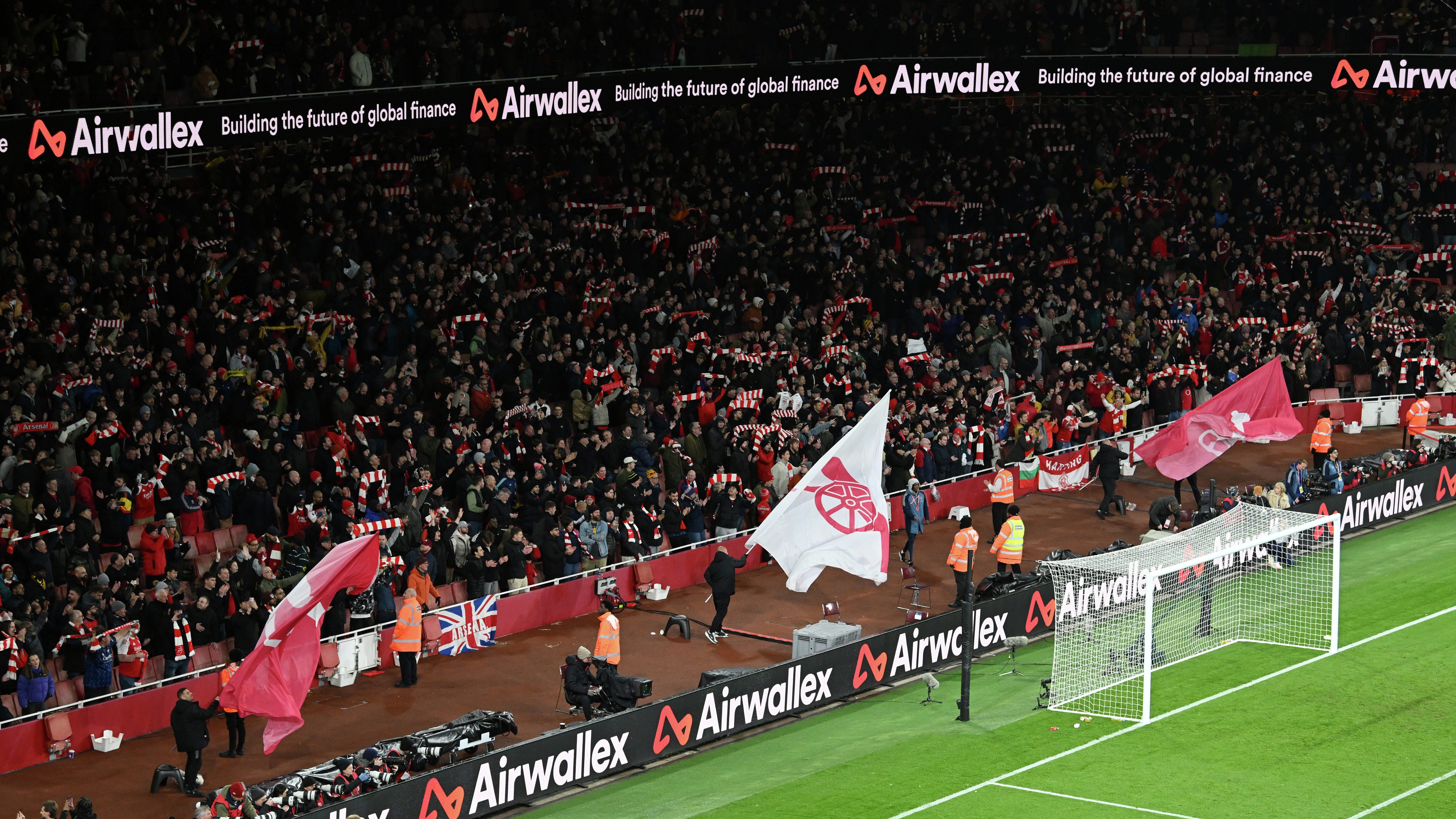
For Zilch, a London-based business with international ambitions, the logic was similar. The reflection began with the UK market (Arsenal has a strong national reach for both its men’s and women’s teams), but the global reach of the club and its alignment with Zilch’s planned European and American expansions was equally relevant.
The approach of these two companies stands in contrast to that of big financial institutions like Visa, which partner on events like the World Cup or Olympics for massive visibility all at once, often using access as a perk for clients rather than pursuing direct brand-building with consumers.
Airwallex has also turned its attention to Formula One, though the costs are considerably steeper. In 2024, the company signed a multi-year partnership with McLaren, displaying its logo on the car halo, driver suits, and team materials. Between 2019 and 2024, Liberty Media reports that F1’s annual sponsorship revenue more than doubled to $636 million. At a team level, total sponsorship revenue increased by 60% to $1.3 billion over the same period, according to Nielsen Sports. The sport has 52 million fans in the United States alone, and 827 million worldwide—a 63% increase since 2018. And when you look at the geographic map of F1’s races, it closely mirrors the markets where international scale-ups are expanding.
*
The timing of these partnerships reflects a broader maturation in the fintech sector. The ecosystem is now mature enough, financially and institutionally, to sustain partnerships that were once reserved for banks. As Airwallex co-founder and CEO Jack Zhang noted in a tweet:

Watson echoes this evolution: “We need to ensure that our brand also has the level of prominence that our product has.” For Zilch, which initially focused on performance marketing to acquire customers, the shift represents a strong change in strategy. “This is not about new customers,” Spickett emphasizes. The partnership isn’t measured by new customer acquisition metrics. It’s purely a brand play, which liberates them to have more fun with the rights they’ve secured. The focus shifts to something less quantifiable but perhaps more valuable: bringing joy.
Building these partnerships proves more complex than simply writing a check. For Zilch, Spickett and the CEO Philip Belamant were directly involved in a process that took almost a year. When they presented the proposal to the board, approval came immediately. The objective was clear: to grow brand and trust quickly. Both Zilch and Airwallex talked to practically all of the major Premier League teams before landing on their final choices.
Arsenal has roughly 30 partners, each with category exclusivity. This structure is common across most clubs. Arsenal didn’t have a payment partner, and Zilch’s solution aligned perfectly with the club’s need for a better payment experience.
For Airwallex, the evaluation process involved measuring what Watson calls the “opportunity cost.” What is their reach? What’s the commercial goal? How many people are on their partnership team? Can they facilitate B2B introductions? Which territories do they cover? But perhaps the most distinctive element of these modern fintech partnerships is the product integration. “We like to work with partners who are willing to also adopt our product set. Generally, we always ensure that whoever we partner with will adopt our product. This means we can help them with their success on their financial journey, as well as us being able to tell that story through case studies.” Watson explains.
The process quickly evolved into parallel conversations. Airwallex’s team moved swiftly to engage with the partner’s financial controllers and CFO, presenting comprehensive product demonstrations that showcase what their technology could do. What emerged were two distinct groups of enthusiasts within the partner organization. The partnerships team saw the opportunity for brand awareness through the activation activities that accompany the deal. Meanwhile, the finance team grew excited about modernizing their existing tech stack with Airwallex’s solutions.
For Zilch, the business partnership was part of the deal from day one as well, though the path to communicating its value wasn’t immediately obvious. “If you’re a clothing brand or a beauty brand, it’s clear what you’re going to bring,” Spickett reflects. “Fintech is tricky. We had to explain who we are and what we’re doing, why this is important for fans, and why this would enable that joy that we’re trying to create. We also wanted to make sure this integration was authentic and brought value to the fans. That’s why we’ve integrated at point of sale in Arsenal Direct and the Armoury, so Zilch cardholders can get a 10% discount on all purchases as well as split the cost of purchases over time at 0% interest.”
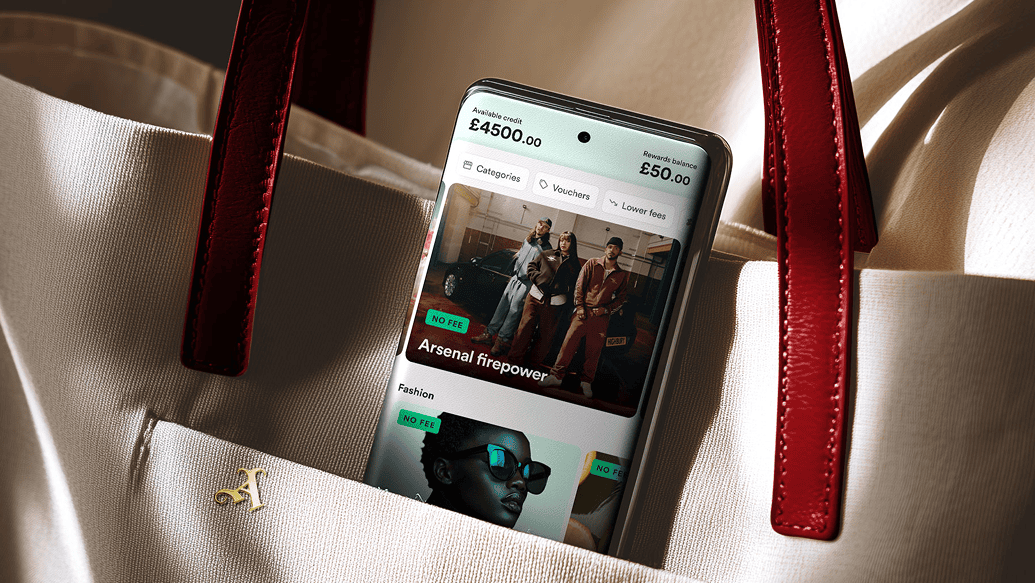
Activation—the ways in which partnerships come alive for consumers—matters enormously for B2C companies like Zilch. The company pushes hard on fan activation with creative approaches that avoid heavy-handed branding. “We turn two green seats in the stadium every single ladies and men’s match, and just before the game starts, we have a couple of people in our big green jackets that go down and surprise them. It might be a pitch side tour, it might be a signed shirt, and it’s just another way for us to do something and link our brand without shoehorning our branding. This is about clever linking rather than getting the players to say, ‘I shop using Zilch’.”
The future of money won’t only be regulated or engineered. It will also be narrated. And increasingly, those narratives will unfold in stadiums, in the shared heartbreak of a missed penalty, in the ecstasy of a last-minute goal.
Thank you to Kirsty and Steven for their time, generosity, and insights.
Most entrepreneurs and companies sell what they build, but the best ones sell what it means. Access my one-page memo to learn how to craft your story.
TY