
The Price of Freedom
After selling half of The Bradery, Edouard Caraco and his lifelong friend borrowed €19 million to take back control of their company.

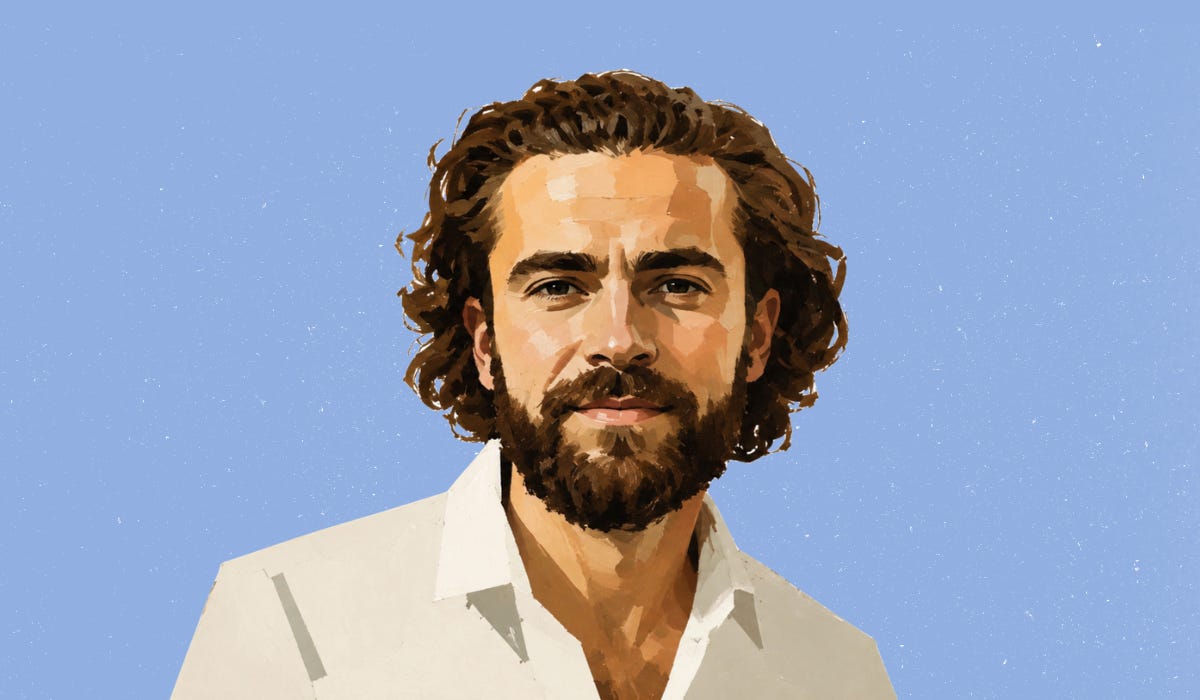
In the departures hall of Paris-Charles de Gaulle airport, Edouard Caraco checks his emails on his iPhone. His wife is beside him. They married a few months earlier, and are about to leave the cold of a Parisian winter for the warmth of the African continent. He locks his phone, then opens it again. For six months, not a single day has passed without an exchange with his lawyers, a new twist, a piece of bad news to absorb.
Edouard hands his boarding pass and passport to the attendant and walks down the jetway. He finds his seat. When the plane’s wheels leave the tarmac, the pressure bears down on his shoulders. His head starts to feel heavy, his throat tightens, shivers run up his back. He is cold, then hot.
“My body was releasing the pressure.”
*
One day, when he is thirteen, Edouard is walking down the street with his brother Arthur. In the distance, they spot Luis Fernandez, the Paris Saint-Germain manager, a club they both support.
“Come on, let’s go ask for an autograph,” Edouard says.
“We’re not going to bother him, that’s Luis Fernandez,” his brother replies.
He hasn’t finished the sentence before Edouard is already gone.
“Edouard has had something singular about him since he was very young,” his brother Arthur recalls. Along the sidelines of football pitches, it is not unusual to see him deep in conversation with someone three times his age. Something that puzzles, and occasionally worries, his parents.
It is on those same pitches that he meets Timothée Linÿer. “He was much better than me,” Edouard remembers—a line he returns to often when talking about Timothée. Something binds the two young footballers quickly. They both have boundless ambition. At middle school, they gather at Edouard’s parents’ place to sketch out businesses they might one day build together. Early on, they become each other’s believers, convincing one another they will make it, that nothing will stop them.
At twenty, Edouard spends several hours a week cleaning the toilets of London apartments. He is not a cleaner, he is a student at the London School of Economics. With Timothée, they have launched a company alongside their studies called Keyweee, a short-term rental management service in London. They have fifty properties under management, mostly belonging to other students. The idea came to them when they struggled to rent out their London apartments every time they went back to France for holidays.
In London, they build an environment designed for success. Like them, the friends they make are ambitious. Edouard and Timothée are not fond of school. They would rather clean Keyweee apartments than polish a lecture-hall bench. They lock themselves away for a month in southwestern France, at their grandparents’, to grind through exams and catch up.
When they finish their degrees three years later, they decide to start their careers at large companies. They want to understand office life, and to build some structure before diving back into entrepreneurship. Besides, some of their friends are signing serious contracts, while they are cleaning toilets and managing apartment key handovers. Edouard joins Amazon as an Associate Partner Manager. Timothée enters JP Morgan as an Investment Banking Analyst.
Every day, Edouard and Timothée call each other. They miss their freedom. If there is ever a time to take risks, it is now. They don’t want to become prisoners of their own comfort. Later will be too late. After just two months, Edouard quits Amazon. Timothée follows a few months later. They join the two co-founders of Wing, a French logistics startup for e-commerce, tasked with developing the business in London in exchange for equity. After two years, they decide to leave. They want to play the entrepreneurship game in full. More risk, more reward.
Before starting something new, the two friends separate for the first time in years and spend two months apart. Edouard travels alone to Central America. A friend joins him, then his brother. He takes in the landscape and immerses himself in Irvin Yalom’s The Spinoza Problem. Timothée is on the other side of the world, in India, but the two friends keep calling each other, talking through their next business. When their friends were in college and going out, they were building Keyweee. Now, as those same friends watch promising careers open up, the pair is out of work, drawing unemployment, and moving back in with their parents.
*
The alarm goes off one morning in March 2018. Edouard gets up, pulls on his shorts, his jersey, his sneakers, and joins Timothée for a run through the streets of Biarritz. Every day of that month in southwestern France begins this way. Then the workday starts.
A few weeks earlier, they had written on a whiteboard the names of companies they could compete with. The first name comes immediately: Vente Privée. There will not be a second. Edouard and Timothée had discovered e-commerce during their time at Wing. Thinking through how to compete with the French online discount giant, they reach a conclusion: “They are very good at selling to our mothers, not to our girlfriends.” They each put in €500 and launch The Bradery.
In Biarritz, at Edouard’s grandparents’ place, their days are devoted to the new project and to sport. Timothée sets up the Shopify. He takes inspiration from what large merchants are doing in the United States. With €1,000 in capital, spending €200 on a theme is out of the question. He picks a free one. He also takes care of developing The Bradery’s Instagram page. Edouard, on his side, spends his days convincing brands to give them a chance to sell a few of their pieces on The Bradery. “Nothing could stop us,” he recalls. He approaches brands as a co-creator, not a vendor. Rather than spending his days building automated email sequences with an uncertain message, he picks up the phone and calls. The human touch makes people want to help.
Sometimes, at five in the afternoon, Edouard and Timothée have nothing left to do. It scares them. They wonder what more they can do. That is the difficulty of starting from a blank page. There is everything to do and nothing to do. The to-do list does not fall from the sky. You have to be able to create your own success. One more message, one more call, one more post. Every day, they repeat the same tasks, often without result. And then one day, without anything having changed, through the simple repetition of an action, an opportunity appears.
After a month, The Bradery makes its first sale. They sell eleven products from the brand Maradji. Convincing other brands remains difficult and the two entrepreneurs run one sale every three weeks in the months that follow. One of those sales ends with zero products sold and they invent an excuse for the brand to avoid looking like amateurs.
The French football team has just been crowned world champions in July 2018 and Edouard and Timothée decide to sell French national team jerseys, unbranded, with two stars, which they will produce themselves. Not entirely legal, not entirely their business model, but Edouard pushes. “He took risks,” his brother recalls. “I am more risk-averse, I thought it was too risky at that stage of the company. But every time he took a risk, it paid off.” Three hundred jerseys are sold. The Bradery gains a little visibility through the operation and tests its processes. Customer service, confirmation emails and tracking are working well.
Two months later, Edouard and Timothée are received at the office of the Gérard Darel group. A mutual contact has gotten them a meeting with the brand’s CEO and his right-hand man. They are welcomed more out of courtesy than anything else. From the start, the two young entrepreneurs try to hide the lack of maturity of their company. After three minutes of conversation, they are challenged on those very weaknesses they had tried to conceal. They leave drained, but with feedback. They each take ownership of processes to improve and are given their chance a few weeks later. They make 75 sales of a Pablo coat, one of the group’s brands. Very little for the company, but it unlocks everything for The Bradery. The Instagram-Shopify-logistics execution works and the credibility of that first sale makes conversations with other brands easier.
The Bradery joins the LVMH “La Maison des Startups” programme at Station F. Their offices on the Parisian startup campus also serve as a warehouse. They spend their weekends there, storing, packing and shipping parcels. Edouard lines up back-to-back meetings with brands. “What on earth did he tell them,” Timothée wonders every time Edouard comes back from a meeting saying “They’re on board.” Every afternoon, Edouard and Timothée lock themselves in a room to call customers, gather feedback, and find out which brands they would like on the platform. They pick up customers little by little, by every means possible. One Sunday afternoon, they go to La Vallée Village, a large outlet shopping complex outside Paris, to hand out flyers. “No need to go to La Vallée Village anymore, you can find your favourite brands on The Bradery,” they read.
Despite the significant efforts, their business grows slowly. One evening, a dinner is organised between Edouard, Timothée, and a few people who have been advising The Bradery since the beginning. The two entrepreneurs are thinking about hiring, and therefore raising. “It’s too early, you haven’t proven the thing, there is nothing to raise on right now,” they are told.
A few days later, Edouard and Timothée meet at an Italian restaurant in the 16th arrondissement of Paris. Just the two of them this time. They want to take stock of their situation.
“What do we do?” they ask each other.
The answer takes time to come. When it does, it is the same for both of them.
“We stop and do something else.”
They shake on it.
*
When they arrive at the office the next morning, a few emails are waiting in their inbox. Two brands have responded to their outreach and Edouard and Timothée want to honour their commitments. The sales go slightly better than expected, and other brands give their agreement to appear on The Bradery. Without noticing, they had thrown themselves back into the adventure. After generating €200,000 in sales in their first year, they hit €1 million in 2019 and raise €1.3 million from Otium Capital, Secret Fund, and Dominique Romano. They don’t structurally need the money. The Bradery’s customers pay directly on the app during flash sales, and The Bradery pays the partner brands’ stock in a second step. The money comes in before it goes out. But the raise will allow the young team to hire, and to benefit from the investors’ network to get introduced to new brands. To think that, a few months earlier, they were on the verge of giving up.
In 2020, Covid strikes. The uncertainty hanging over the global economy clears quickly for the two entrepreneurs. On one hand, people understand they will keep getting paid and start buying more and more online. On the other, brands understand their stores will not be reopening any time soon and that stock sitting idle in their warehouses needs to move.
One Sunday morning in November 2020, at 8:45am, Edouard is at his computer. He is in a house in Biarritz with his girlfriend and her mother. France is in its second lockdown. In fifteen minutes, a Sandro sale goes live. Since the early days of The Bradery, it is the best-known brand sold on the platform. Like every morning, Edouard logs into Shopify to check the traffic on the site. He stares at the number on his screen. 17,000 people are waiting for the sale to launch. He calls Timothée, euphoric. The two friends can’t believe it. In the house, Edouard announces: “If we sell more than a million euros, I am going to buy caviar.” He spends the morning pacing the garden, earphones in, making calls to fill the ambient silence he can no longer control. At eleven, he checks the sales total. Another number appears on the screen: €1.2 million. Edouard gets behind the wheel of his car and sets out to buy caviar. By evening, the figure has reached €1.6 million. 15,000 orders placed in a single day. The euphoria does not last.
The stock from the previous sale arrives late, on the same day as the Sandro stock. Shipping 15,000 orders is already a challenge, but now they have to dispatch two sales at once. The parcels fall several weeks behind schedule. Christmas is approaching and the messages from customers waiting for their orders are sharp. Sometimes cruel. “You are good for nothing,” that is what the young customer service employees read every day in the complaints addressed to them. For every aggressive message, Edouard and Timothée pick up the phone and call the customer to defuse the situation.
From the outside, the signs of success are obvious. Sales are larger. Brands on the app are better known. The number of Instagram followers never stops growing. But from the inside, Edouard and Timothée feel like they are living in a house of cards, where the slightest gust of wind could bring everything down.
*
One morning, while scrolling through his competitor Vente Privée’s app, Edouard is surprised to see a Bash sale appear. For several weeks, he has been trying to convince the brand’s founders to offer their products on The Bradery. “We don’t have stock,” they tell him repeatedly. He takes a screenshot, goes to a florist, and spends €200 on a bouquet of white roses which he sends to the brand’s founders. When they receive it, they read the note accompanying the bouquet. “Dear Barbara and Sharon, if you no longer wish to be stuck between a toolbox and a plastic bin, call me. Edouard.” The afternoon passes. Nothing. He wonders if, this time, he has gone too far.
“His tenacious side, sometimes aggressive, is both his strength and his flaw. It makes him polarising. For people who lack confidence, it throws them off,” his brother says. “Every winner took their shot,” Edouard prefers to tell himself.
When evening comes, his phone rings. It is the Bash founders. “The next sale is yours.”
In 2021, The Bradery generates €50 million in sales, mostly from France. Edouard has breakfast and lunch every day with brands he works with or would like to work with. He often meets at Carette, near his apartment at Trocadéro. He arrives with his hair still wet, greets the owner and sits down. He is never on his laptop, always on the phone or face to face with clients, looking for new opportunities.
A small part of The Bradery’s business also comes from the Benelux and Spain. Edouard and Timothée had tried to accelerate in Europe by opening offices in Barcelona and Amsterdam, but managing the expansion from France proved too complicated. They still had too much to do to conquer the French market before entering others, and close the offices after a few months.
“When things don’t go as planned and it’s time to question yourself, I know I never need to remind Edouard. He has already done it. He sets the bar very high,” says Timothée.
Two feelings compete in the two friends at this point. They would like to generate a little cash for themselves—a reward for all the work put in over three years—but also to keep pushing.
One public holiday in the summer of 2021, representatives from Zalando walk through the doors of The Bradery’s offices to discuss a potential acquisition. Around the small lunch table, certainly not suited for a meeting of this kind, Edouard and Timothée are surrounded by twelve people. A several-page document with a summary of the situation, which they know by heart, is handed out. For ten minutes, a cathedral silence falls over the room. Edouard and Timothée glance at each other sideways, on the verge of bursting out laughing. They pretend to highlight passages. The culture clash proves too great for the deal to survive.
Showroomprivé, with whom they had already started talking a year earlier, as well as Vente Privée, also enter into discussions to acquire the startup. The process is exhausting, but a deal takes shape for the two entrepreneurs. Vente Privée withdraws, and Edouard and Timothée, getting along very well with David Dayan, the co-founder and CEO of Showroomprivé, decide to sell 51% of The Bradery’s capital. The two companies are competitors, but complementary. The deal will allow Showroomprivé to bring a younger market into its group, and The Bradery will benefit from the weight of Showroomprivé, which generates one billion euros in revenue, to go after new brands. The Bradery keeps its offices and its independence. In three years, they will be able to sell the rest of their capital.
Edouard and Timothée cannot imagine turning down such an opportunity on the eve of their thirties. The Bradery is their baby, but they could build other businesses afterwards. Edouard has always been inspired by the diversity of Richard Branson’s entrepreneurial path and his Virgin group, in aviation, music, telecommunications. The acquisition would also consolidate the freedom he is so attached to.
But after a year and a half under Showroomprivé’s wing, the two friends realise that things will not go as planned.
*
During the summer of 2024, Edouard, Timothée and their lawyers receive an email from Showroomprivé’s lawyers. The end of the earn-out period, at the end of 2025, is approaching, and according to Showroomprivé’s management, The Bradery is not sufficiently structured for the founders to leave at the end of that period. The second part of the deal is being called into question. Edouard and Timothée disagree, but find themselves at an impasse. Certain points in the initial deal document do not protect them sufficiently. The two co-founders blame their lawyers for not having warned them more; they change lawyers once, then a second time. Long negotiations begin.
For a year, Edouard loses all his bearings. The lack of perspective robs him of all freedom. He feels prisoner of a situation he cannot control. He does not know if he will stay or if he will leave. “I went to work every morning with a knot in my stomach,” Timothée recalls. For a year, the two friends talk to their lawyers every day. During the day, their energy goes into operations. The Bradery continues to grow—its revenue has tripled since 2021—but the teams are asking questions about their future. They do not know if they will be absorbed into Showroomprivé and lose their two co-founders. In the evening, Edouard and Timothée devote what little energy they have left to talking with their lawyers, often by phone, by video call, or sometimes in their offices. The news is rarely good and Edouard struggles to keep his composure.
“I tend to let myself be carried away by my emotions. I talked too much. The upside is that you are someone straightforward. But in a negotiation, where there is a more complex set of emotions, I was not good. I could feel myself falling into the trap, but I fell into it anyway. That frustration put me in a difficult position. What you get out of frustration is rarely positive. It never serves your interests. You have to stay calm, silent. I learned a lot.”
“Timothée is much calmer than me in that kind of situation. He is smart enough to know that when I have talked too much, he knows that I know it. Sometimes I could feel he wanted to tell me. But we know each other so well. He does not need to say things for me to know what he wants to say.”
Edouard finds comfort with his friends, to whom he confides. “I must have been unbearable for most of the people I spent time with. Fortunately I had my friends and my wife to talk to. Without them it would have been impossible.”
Despite his fever on the plane, he manages to disconnect, with his wife, on the African continent—the lack of signal in certain regions helping him switch off in the first few days. He comes back refreshed, more motivated than ever to find a solution.
After countless daily back-and-forths with the lawyers for a year, Edouard and Timothée decide to buy back 100% of their company’s capital. To do so, they need to raise €19 million in debt. A tour of the banks, accompanied by their investment bank, begins. They face a first rejection. A banking pool has to be assembled, and it only takes one bank to pull out for everything to collapse. Every day, Edouard calls his brother. One day, the beginning of a solution seems to take shape. The next day, it falls apart.
“Up until now, everything we had done had gone well, without too many obstacles, all things considered. This is the biggest ordeal Timothée and I have been through. We never fought. And yet I drove him mad with my paranoia. I was convinced the worst was certain. That must have been a weight for him. He was an incredible support, someone I could lean on. And because he knows my weaknesses, he has the right words to lift my spirits. That is what works when you are a duo. When he was not doing well, I was doing well and I lifted his spirits. And when I was not doing well, he was doing better and he motivated me again. We pulled each other through.”
In November 2025, the deal is not finalised but is on track. A letter of intent was signed a few weeks earlier. The two friends are about to own 100% of The Bradery’s capital again, at a new valuation of €43.6 million. For the first time in a year and a half, Edouard breathes. That day, he is on his way to the maternity ward. His daughter, Giulia, has just been born. His family is there. Timothée too.
Notes:
Thank you to Edouard for his time. Despite a packed schedule, we spent several hours together over the past few weeks. Thank you to Timothée Linÿer and Arthur Caraco for our conversations. GDIY and TheBoldWay podcasts were also invaluable groundwork.
These profiles illustrate the work I do privately with founders as a storytelling consultant and ghostwriter. As a founder, you tell stories every day. If you don’t do it well, you miss opportunities to hire talent, attract investors and sign customers. If you feel like you’re sharing your CV when you should be telling a story, reply to this email.
If you enjoyed this piece, you can show your support by liking, commenting and sharing. It helps me a lot to gain visibility on Substack and beyond.